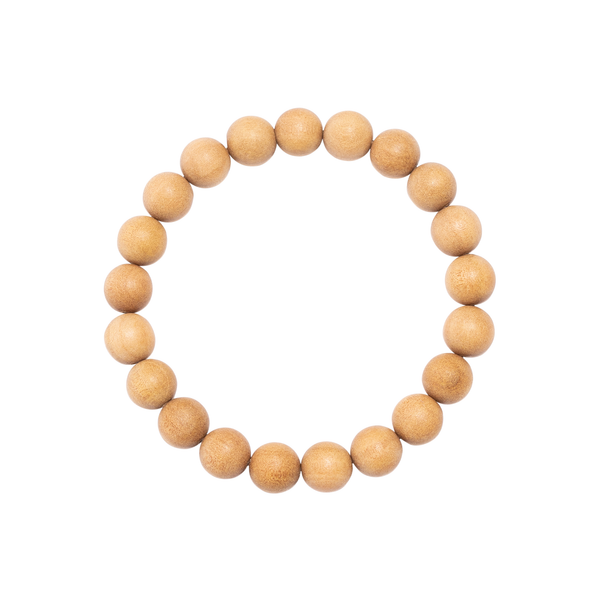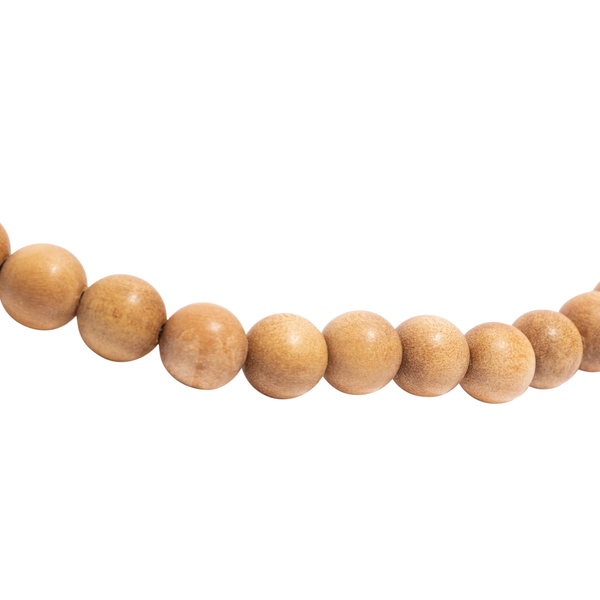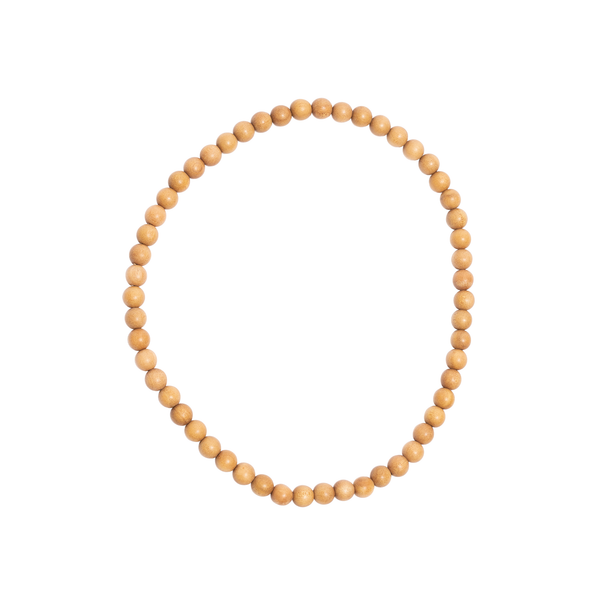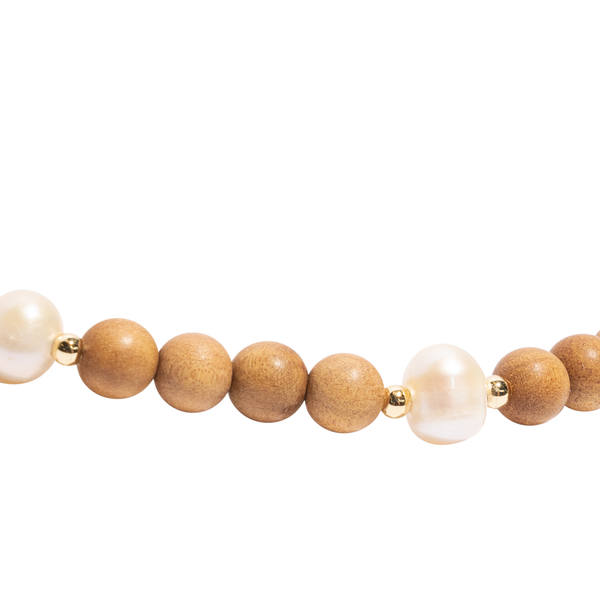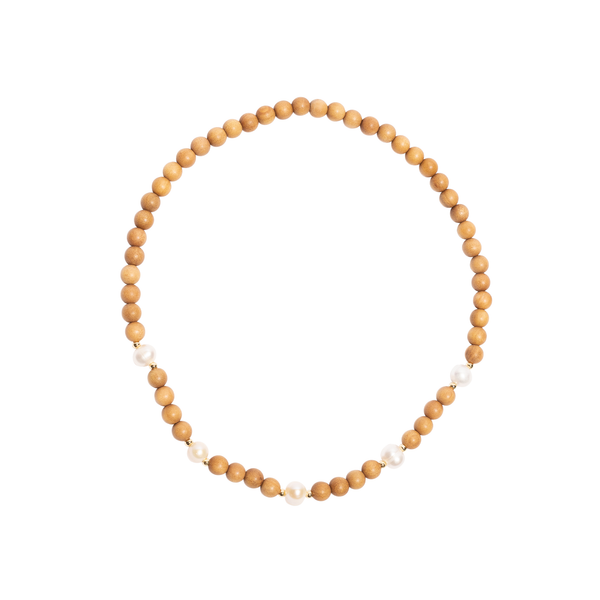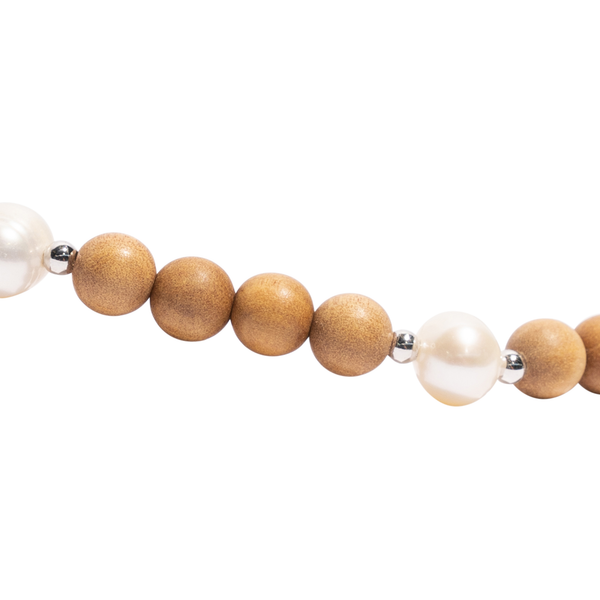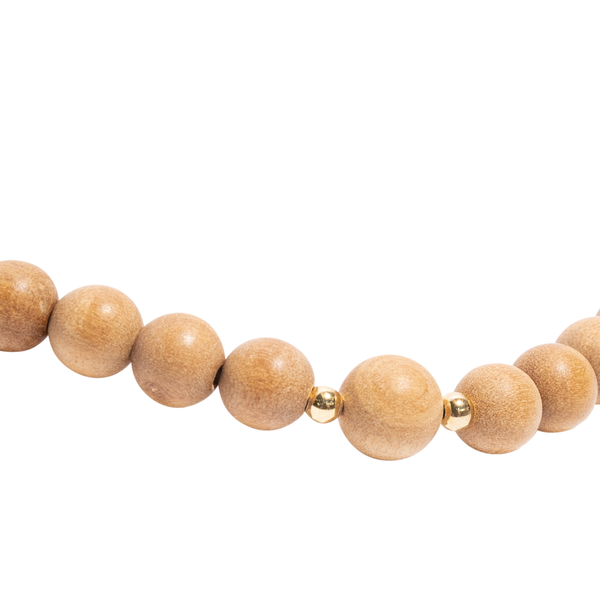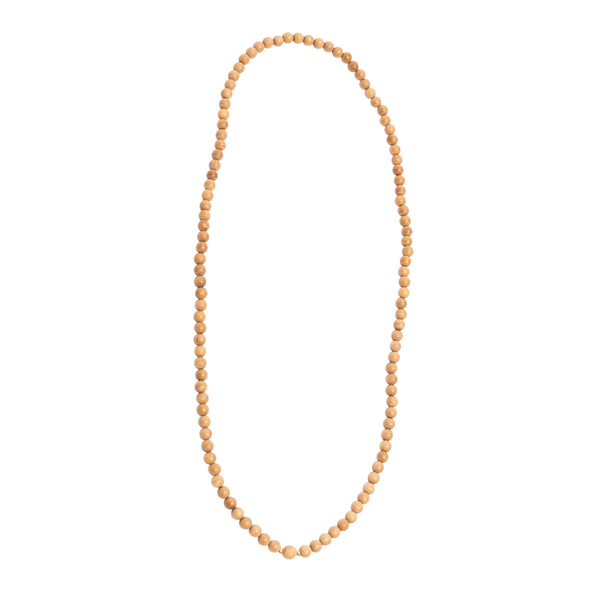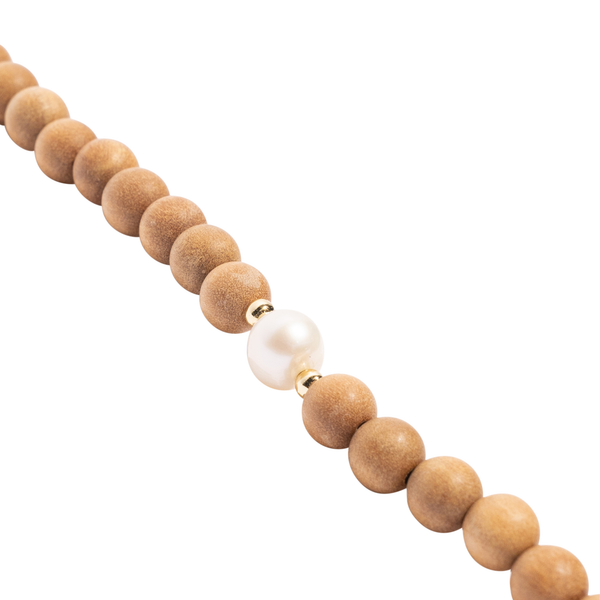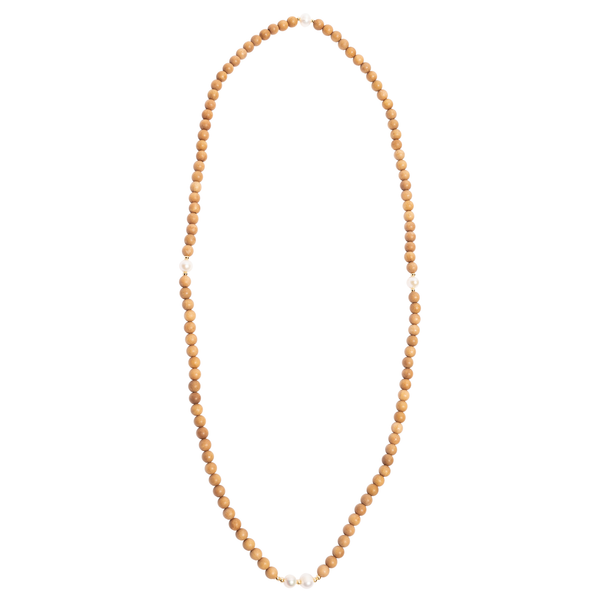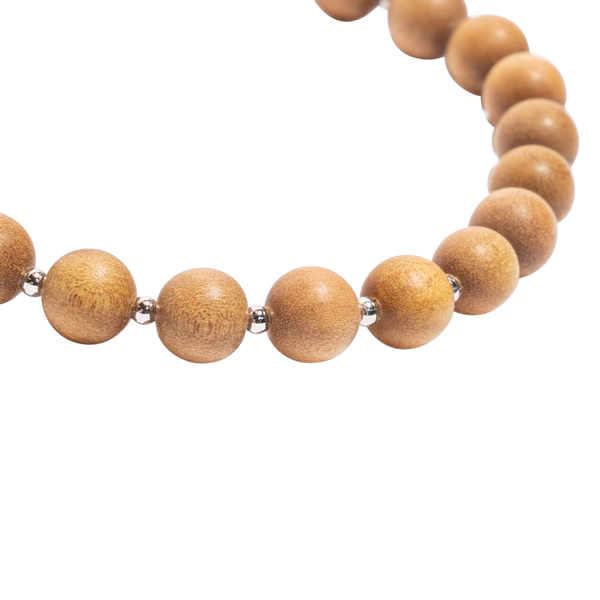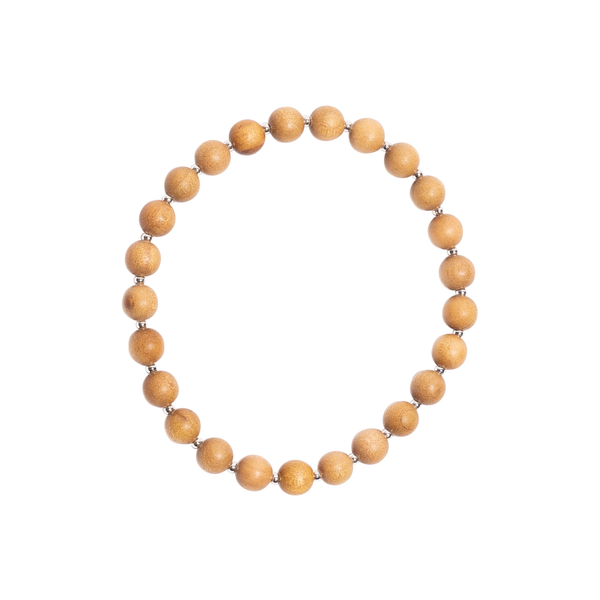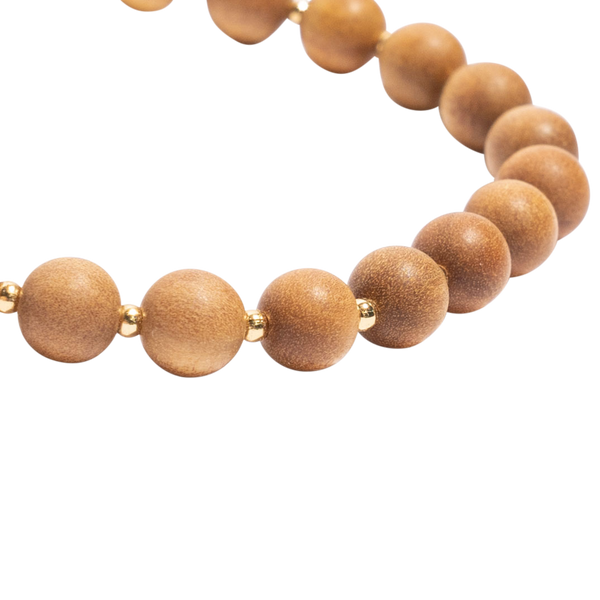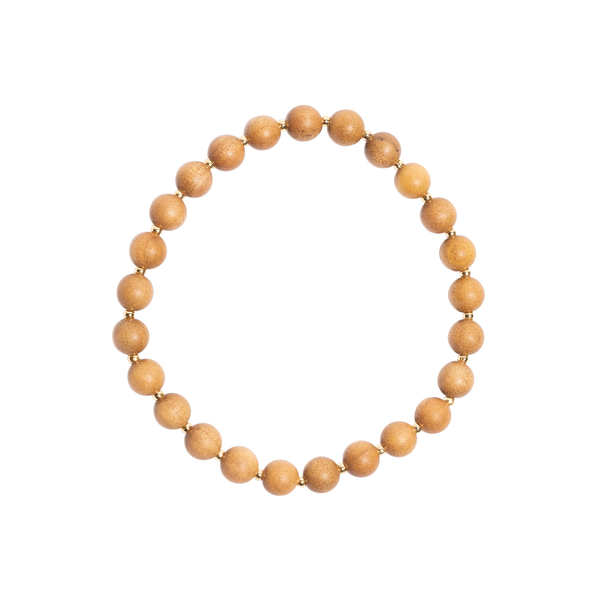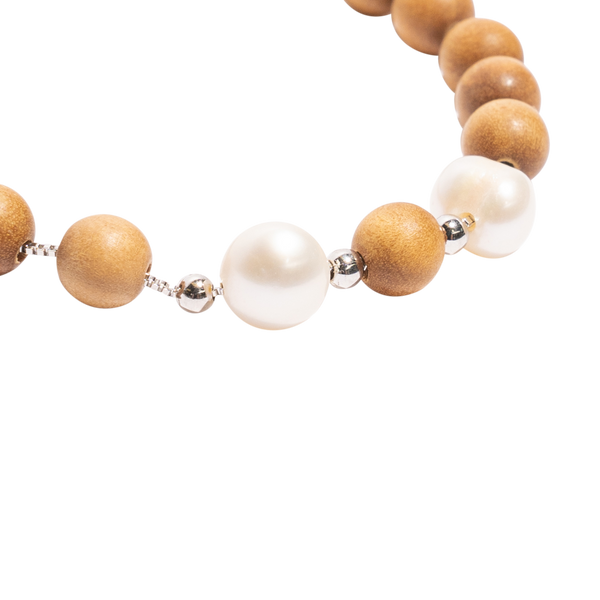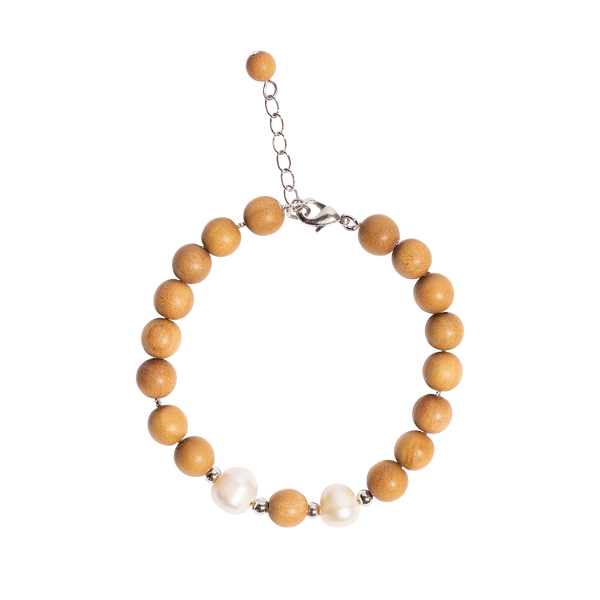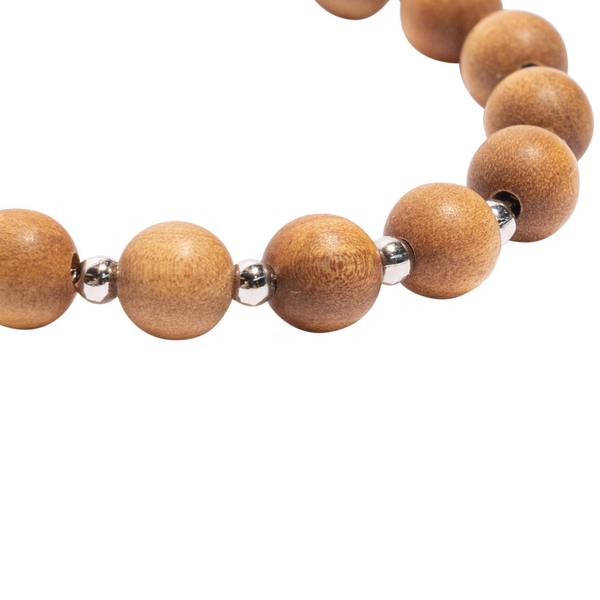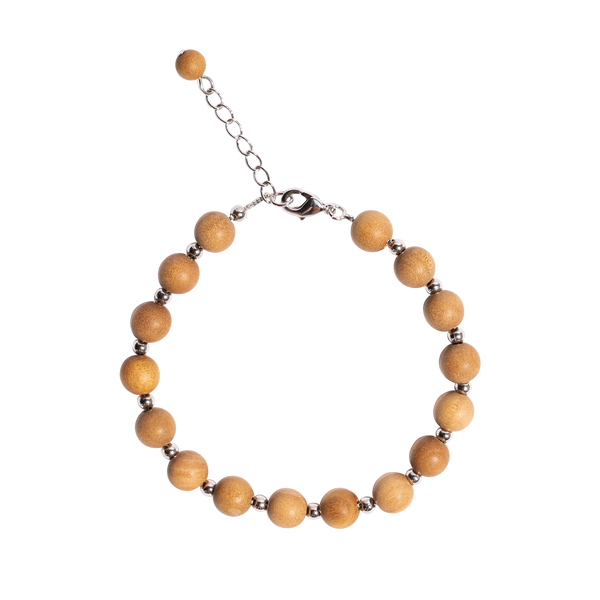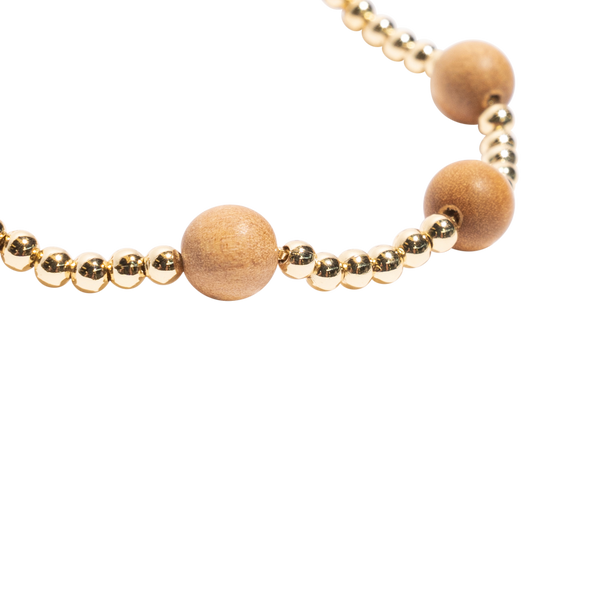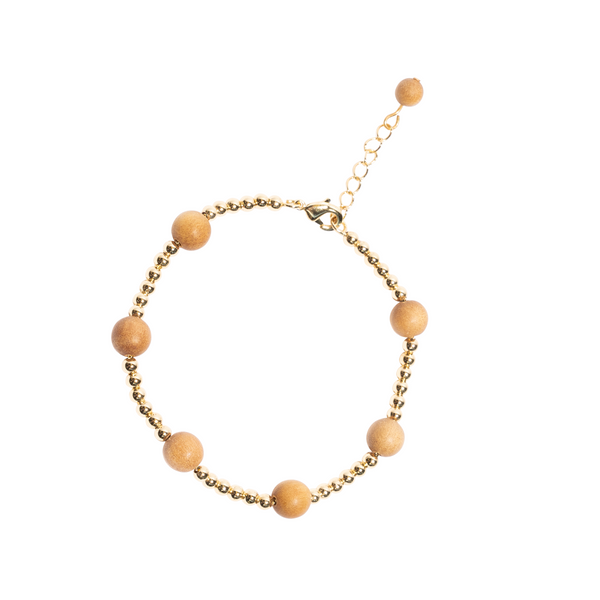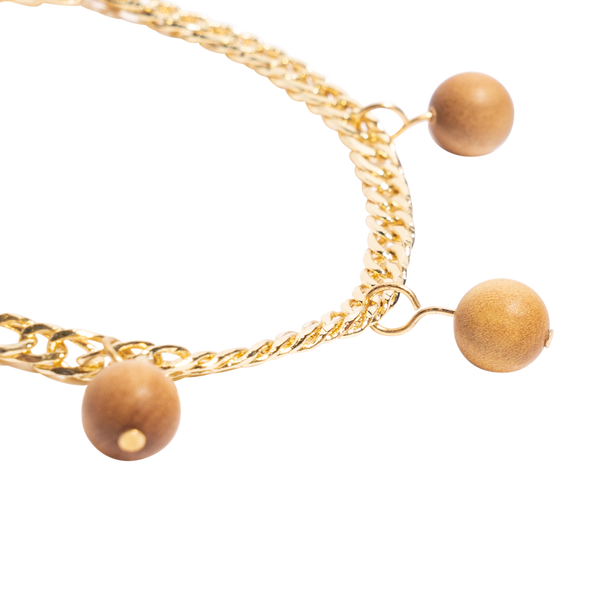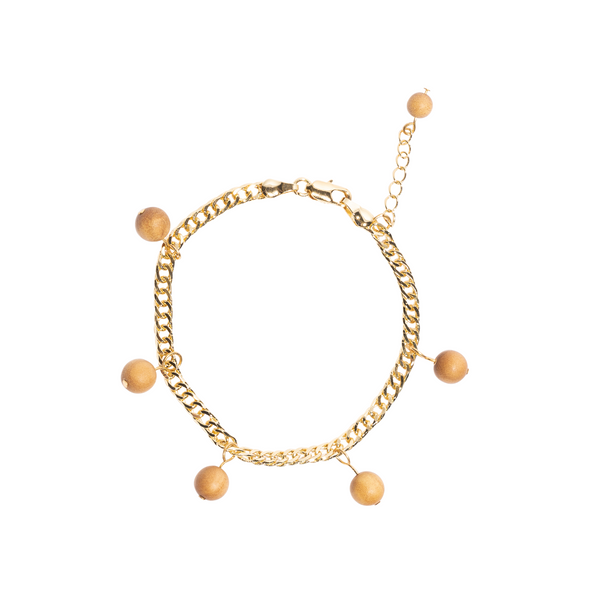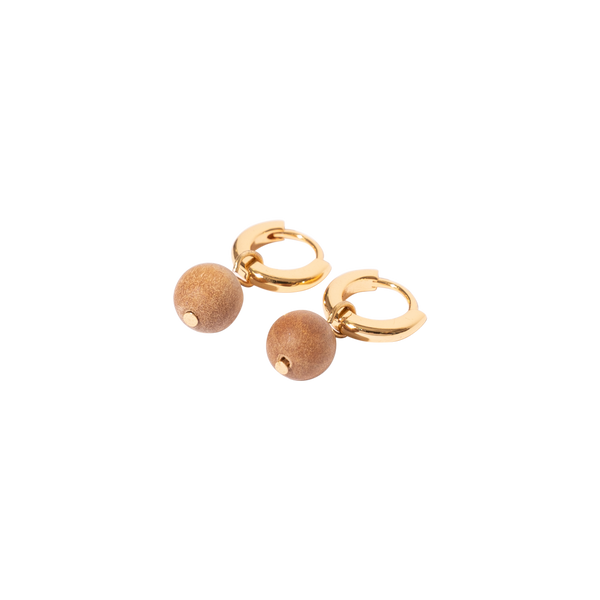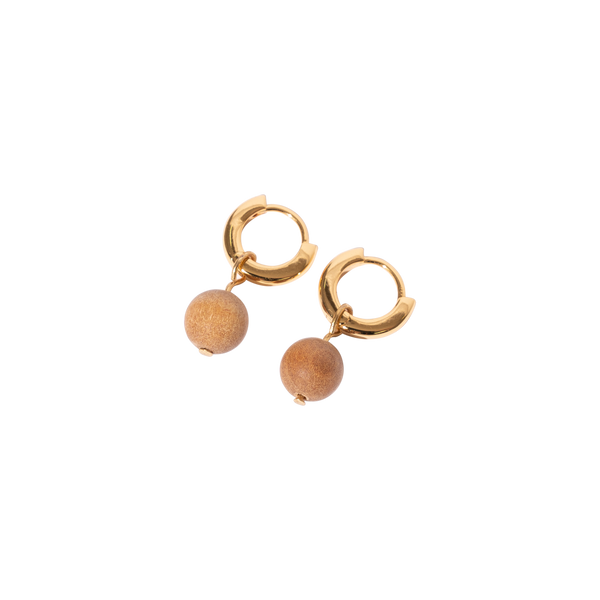
To celebrate the launch of Heartwood’s new sandalwood mala jewellery collection, we’re taking a closer look at the ancient lineage behind these modern pieces. In this article, we unpack the history, meaning, and quiet power of sandalwood malas - from their earliest appearance in spiritual practice to their evolution into objects of wearable calm and conscious luxury today.
What is a Mala?
“Mala” (Sanskrit: garland) denotes a string of prayer beads originally associated with all of the spiritualities of India: Hinduism, Buddhism, Jainism, and Sikhism, to count repetitions of mantras or prayers. A canonical mala has 108 beads plus a “guru” bead; shorter forms such as 12, 18, 27, 36 or 54 beaded malas are common. Materials vary and include tulsi, rudrāksha, seeds, bone and gemstones, but sandalwood remains one of the most prized.
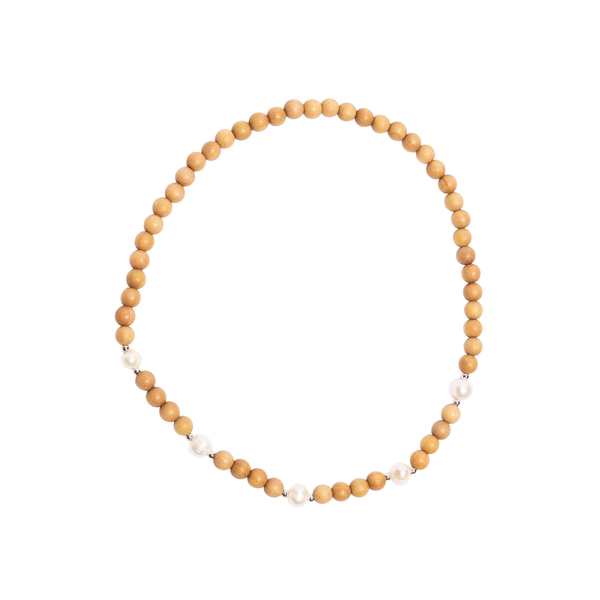
Why is Sandalwood Sacred to the Mala Tradition?
Smooth, warm, and subtly aromatic, sandalwood has become one of the world’s most revered prayer beads because it embodies exactly what spiritual practice asks of the devotee: calm, clarity, presence.
The ritual of using beads to count prayers or mantras can be traced back to ancient India to at least the 8th century BC, when early Vedic practitioners began using strings of seeds or wood to mark mantra recitations.
By the 4th–5th century AD, Buddhist texts were describing malas specifically crafted from the sacred tree, sandalwood, which remains one of the most treasured aromatic mediums for meditation, prayer, and ritual.
Sandalwood’s religious prestige long predates its use in beads. Across Eastern traditions, sandalwood paste, incense, and oil have been used to anoint deities, mark the body, perfume sanctuaries, and accompany prayer - practices rooted in sandalwood’s longevity, durability, and calming fragrance.
A Universal Practice - Beyond Religion, Across Cultures
One of the most remarkable truths about bead-based prayer is that it transcends culture, geography, and belief systems. The impulse to count, to ground oneself, to mark devotion physically, is universal.
In each of these religious traditions, malas aren’t just objects; they are companions in ritual. Each bead marks a repetition - a mantra, a blessing, a moment of gratitude. The act of “moving” through the beads is physical meditation: steady, rhythmic, grounding.
- In Hindu and Buddhist traditions, the mala guides japa — mantra repetition.
- In Catholic tradition, the rosary offers structure to prayer and devotion.
- In Sufi and Islamic traditions, misbaha or tasbih beads count sacred phrases.
- In Eastern Orthodox Christianity, chotki cords fulfil a similar purpose.
- In Sikh practice, bead strands accompany remembrance (simran).
Counting beads is not “owned” by any one religion. It is a shared human instinct - a desire to move rhythmically through devotion, blessing, or reflection.
How to Use Your Mala Beads With Meaning and Intention
Wearing a mala is beautiful. Using it is transformative. Here’s how modern practitioners - spiritual, secular, or somewhere in between - incorporate malas into their daily ritual:
1. Set Your Intention
Before using your mala, pause. Place it in your hands and ask yourself:
What energy do I want more of today?
Calm? Gratitude? Courage? Compassion?
Your intention becomes the thread running through your practice.
2. Choose a Mantra, Prayer, or Simple Phrase
It can be traditional (“Om shanti”), spiritual (“I am here”), or completely personal (“Let me move with ease today”). There is no wrong choice - only resonance.
3. Move Slowly, One Bead at a Time
Start at the bead next to the larger “guru” bead.
With each bead, repeat your phrase silently or aloud.
Let your breath guide the pace, not your mind.
4. When You Reach the Guru Bead, Pause
Tradition suggests you don’t cross over it.
Instead:
Take a breath.
Allow the cycle to land.
If you want to continue, turn the mala around and trace your steps back.
5. Wear It as a Daily Reminder
A mala worn throughout the day becomes a kind of quiet pact with yourself.
A promise to return - again and again - to the version of you who is steady, centred, and present.
The New Luxury Is Intention
In a fashion culture that craves depth as much as beauty, sandalwood jewellery offers something rare: purpose.
Every bead carries the tradition of centuries of ritual. Worn on the wrist or layered at the collarbone, your mala provides a way of giving the mind structure, rhythm, and something to hold in moments of inner wandering.
Quiet luxury is no longer just aesthetic - it’s a state of mind.